
Products
Solutions
Resources



2025 was a big year for Statsig
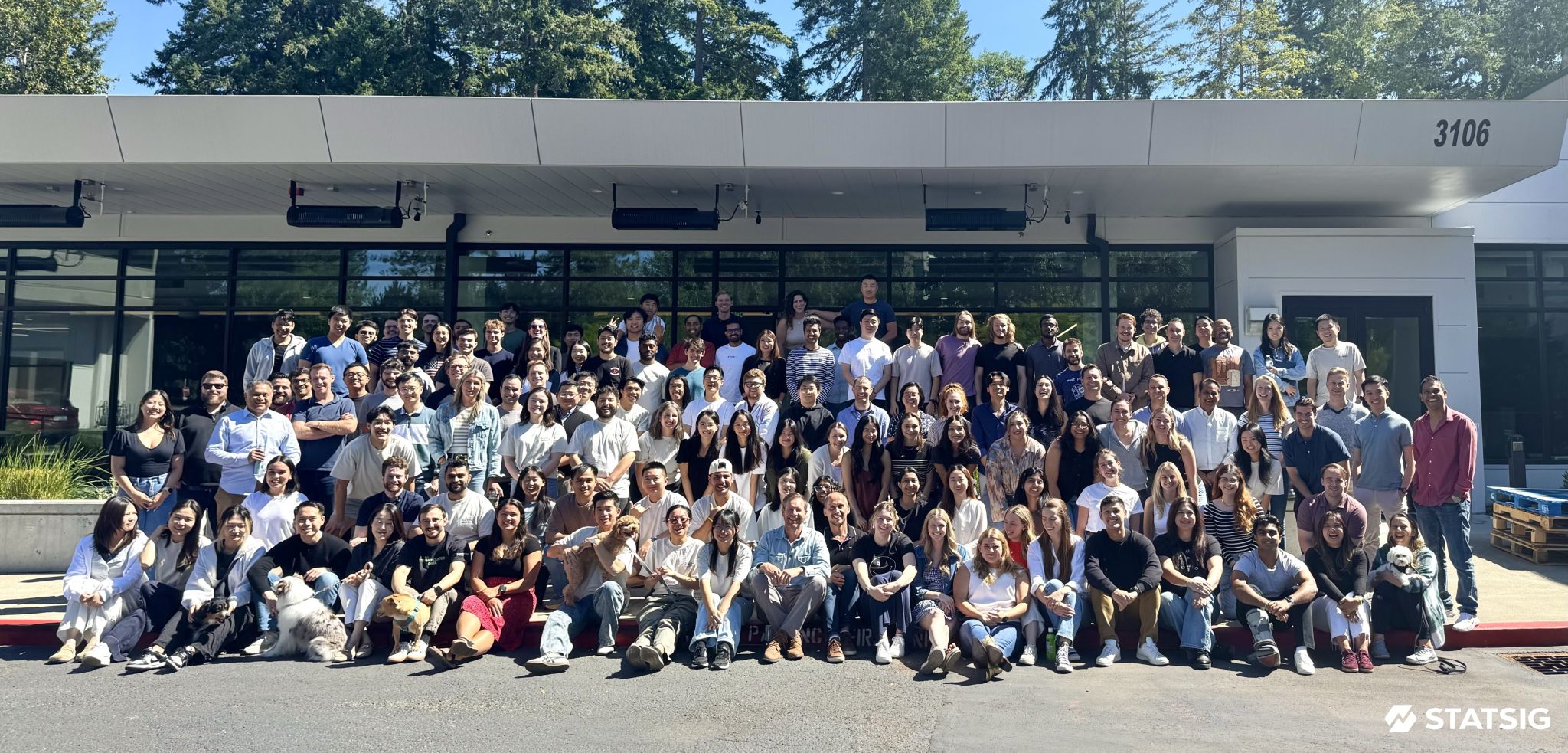
We shipped a new feature every 3 days on average, grew the team to 170 full-time employees, earned the trust of 20,000 weekly active users, raised our Series C, hosted our annual Significance Summit with more than 600 attendees, and ended the year with a bang - joining forces with the team at OpenAI!
That’s a lot to unpack. As we close out the year, it’s a good moment to reflect — not just on how far Statsig has come as a company, but also on how product building itself has evolved since Statsig was founded four years ago.
How did we get here?
When we founded Statsig in 2021, there was a clear gap in the market: world-class experimentation tools were largely confined to a handful of big tech companies. Many teams wanted to build with the same rigor, but didn’t have access to the infrastructure or expertise.
Our earliest customers reflected that gap. Many were former big-tech product and engineering leaders who wanted to bring a culture of data-driven decision-making to their new teams.
Over time, it became clear that what we were building went beyond “product data tooling.”
Teams were using Statsig to:
Ship faster, without taking on unnecessary risk
Learn continuously from real user behavior
Give more team members access to data to inform smart product decisions
At its core, Statsig became a way for teams to ensure their products were delivering real value to customers.
Enabling teams to build the best products
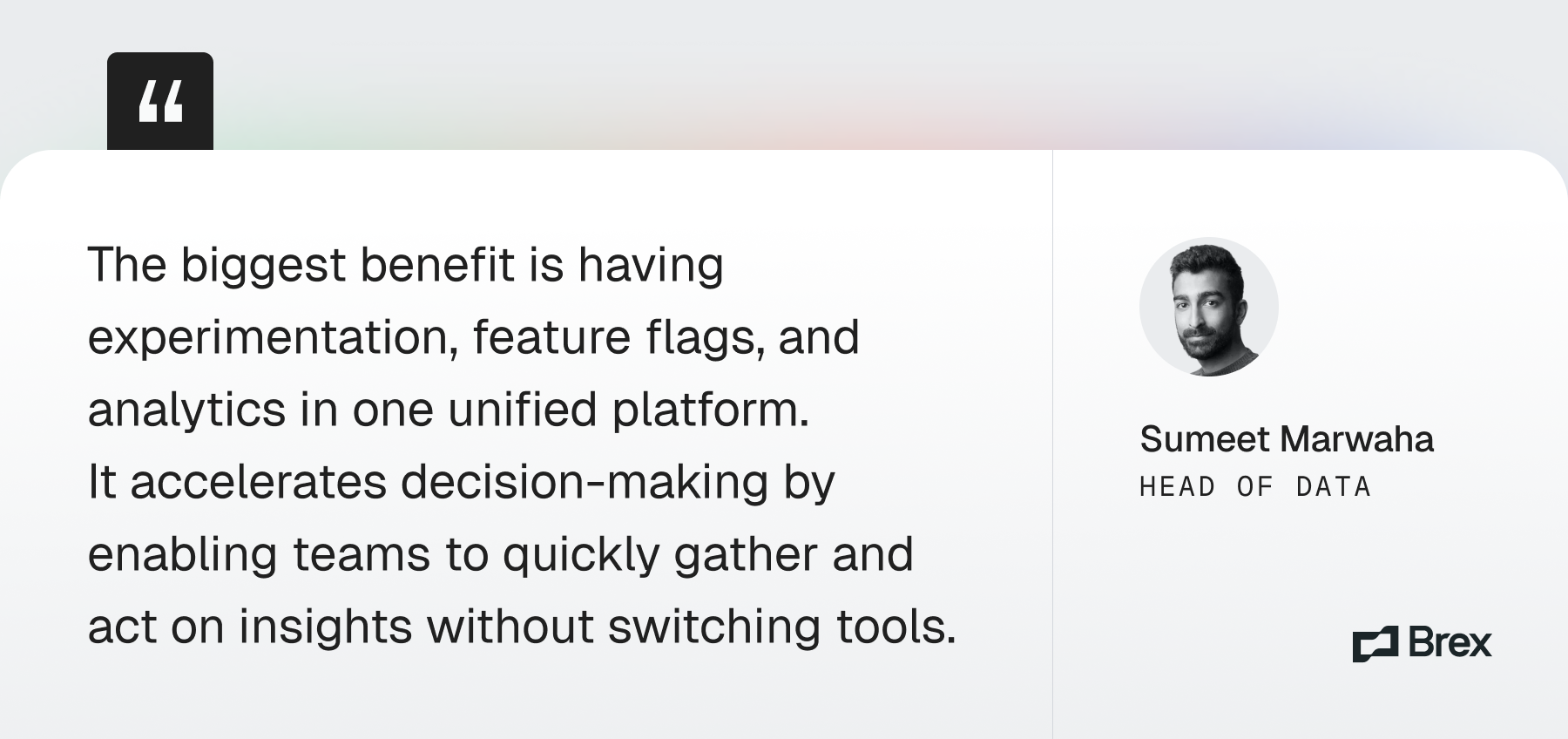
Some of our earliest customers included companies like Notion, Figma, Whatnot, Brex — and yes, OpenAI.
These companies were growing quickly. They were shipping fast, scaling their organizations, and staying focused on the metrics that mattered most. What they had in common was a commitment to continuous learning and rapid optimization. It’s no coincidence that many of them went on to build some of the defining products of the last few years.
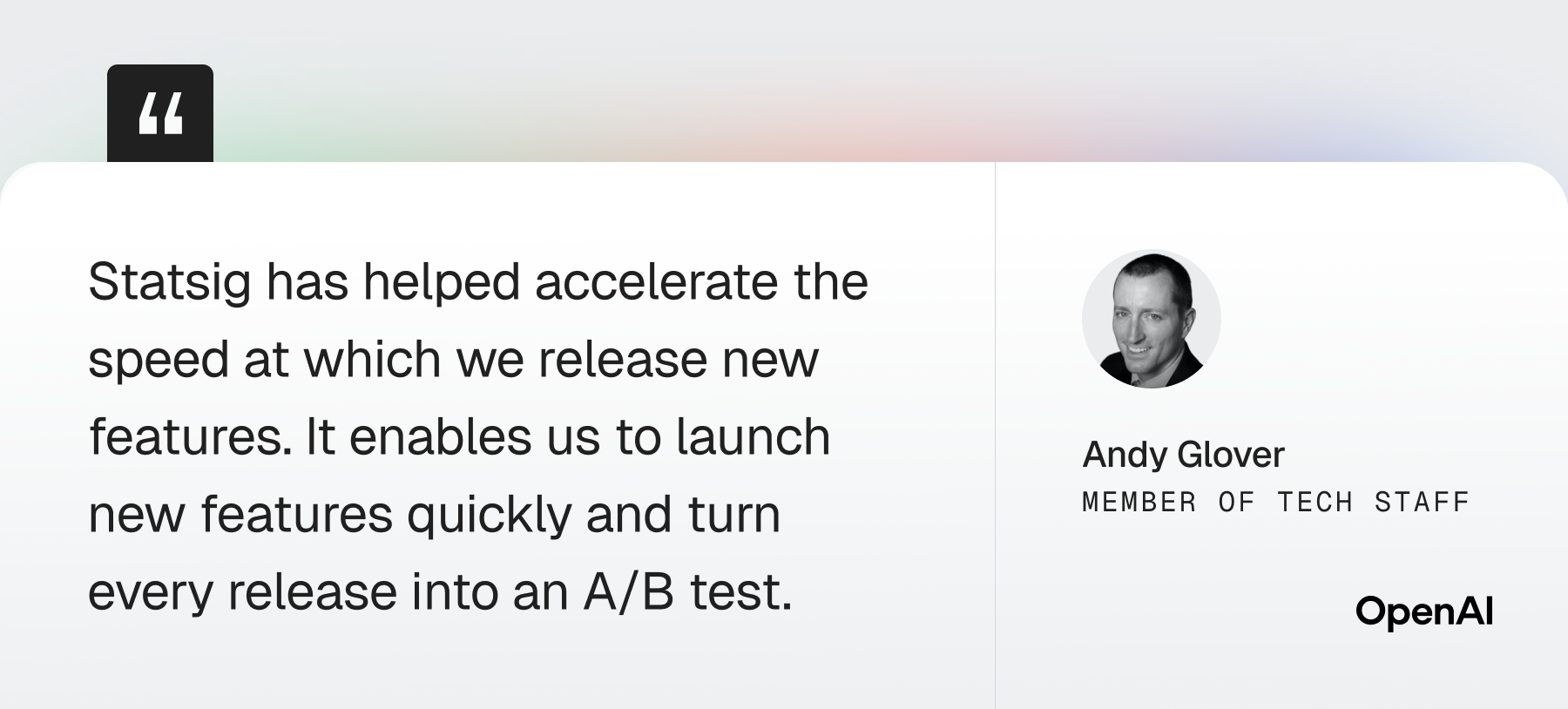
As Statsig grew, we partnered with more companies modernizing how they build products — including Atlassian, Bloomberg, and Affirm — many of whom were moving off in-house experimentation systems. We’re always energized to hear how Statsig has become core to how companies like Grammarly ship and learn at scale!
Over the last couple of years, two shifts became especially clear:
1. Experimentation is expanding beyond digital natives.
More enterprises than ever — from digital natives to traditional Fortune 500s — are getting serious about investing in data-driven product development. Today, we work with thousands of companies across industries, business models, and stages of growth.
2. Real-world validation has become critical for AI-powered products.
As customers like Notion and Figma introduced LLM-driven features and more non-deterministic systems, they have leaned more heavily on Statsig. Teams building LLM-powered experiences need tight feedback loops from real users to turn AI investment into real outcomes.
During this period, we began working with a new generation of AI-native companies like Character AI, Harvey, and Cursor — all focused on directly connecting model behavior to customer value.
Which brings us to today: AI is becoming ubiquitous — in products, in workflows, and increasingly in how teams write and ship code. Every company is feeling the acceleration. The challenge is no longer just how to ship faster, but how to learn faster.
2025 in numbers
Against that backdrop, the growth we’re seeing on Statsig reflects how teams are building today:
3 trillion events processed per day
4 billion unique end users reached through experiments
2.5× YoY growth in experiments and feature gates — driven both by new customers and deeper usage within teams
Nearly 7 million analytics queries executed on the platform

We’re also seeing meaningful change inside individual companies.
At Atlassian, for example, Statsig has helped teams increase experimentation velocity to the point where nearly every product change is treated as an opportunity to test, learn, and improve.
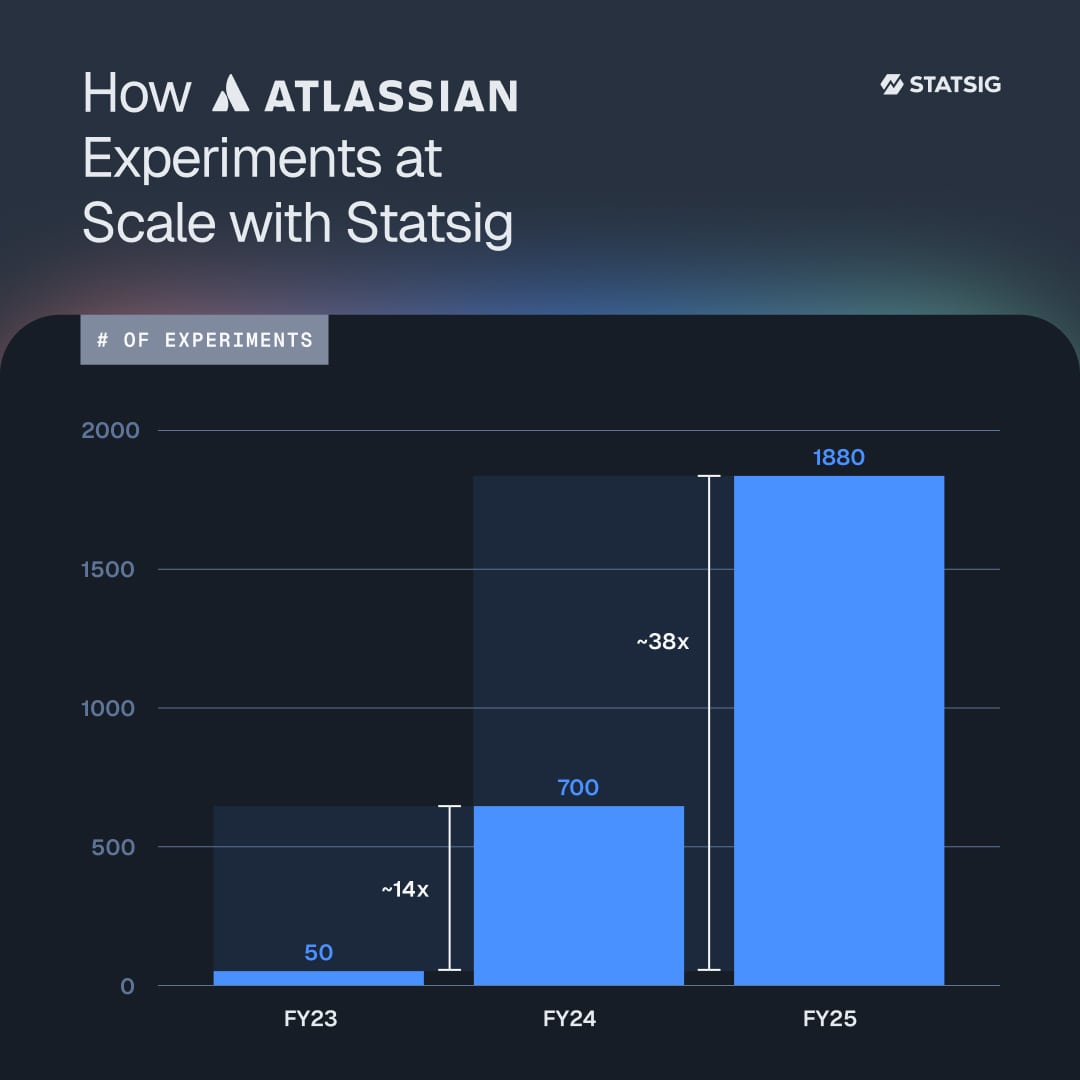
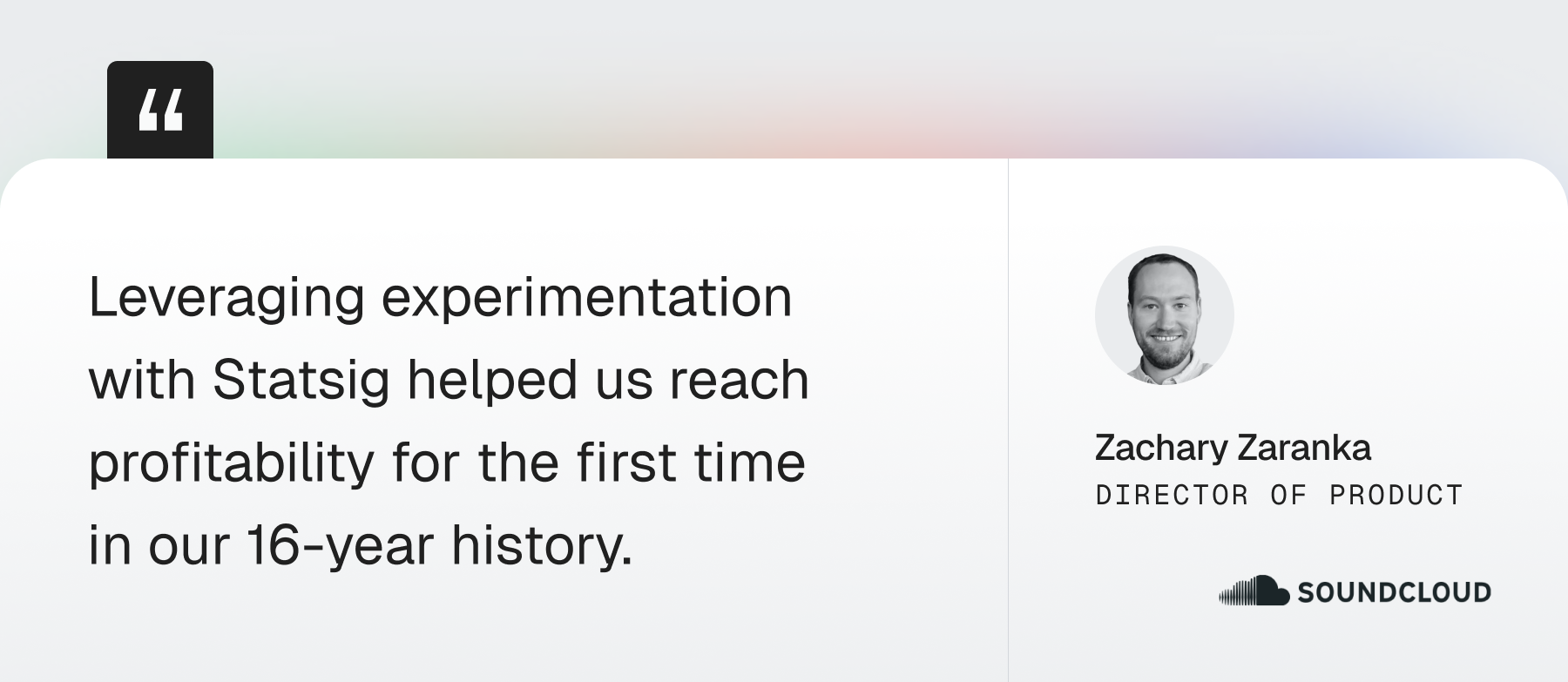
Ultimately, it’s all about impact. Increased testing velocity directly correlates with product and business success.
The road ahead
As AI continues to accelerate how quickly teams can build and ship, speed alone is no longer the differentiator. When systems become more complex and less deterministic, progress depends on understanding what actually helps customers — not just what shipped.
Looking ahead, learning quickly and reliably from real users will matter more than ever. Statsig exists to make that learning loop practical at scale: connecting what teams ship — from product changes to AI-powered experiences — to real-world impact. So teams can adapt faster, build with confidence, and stay focused on what truly matters.
Here's to building with confidence in 2026!